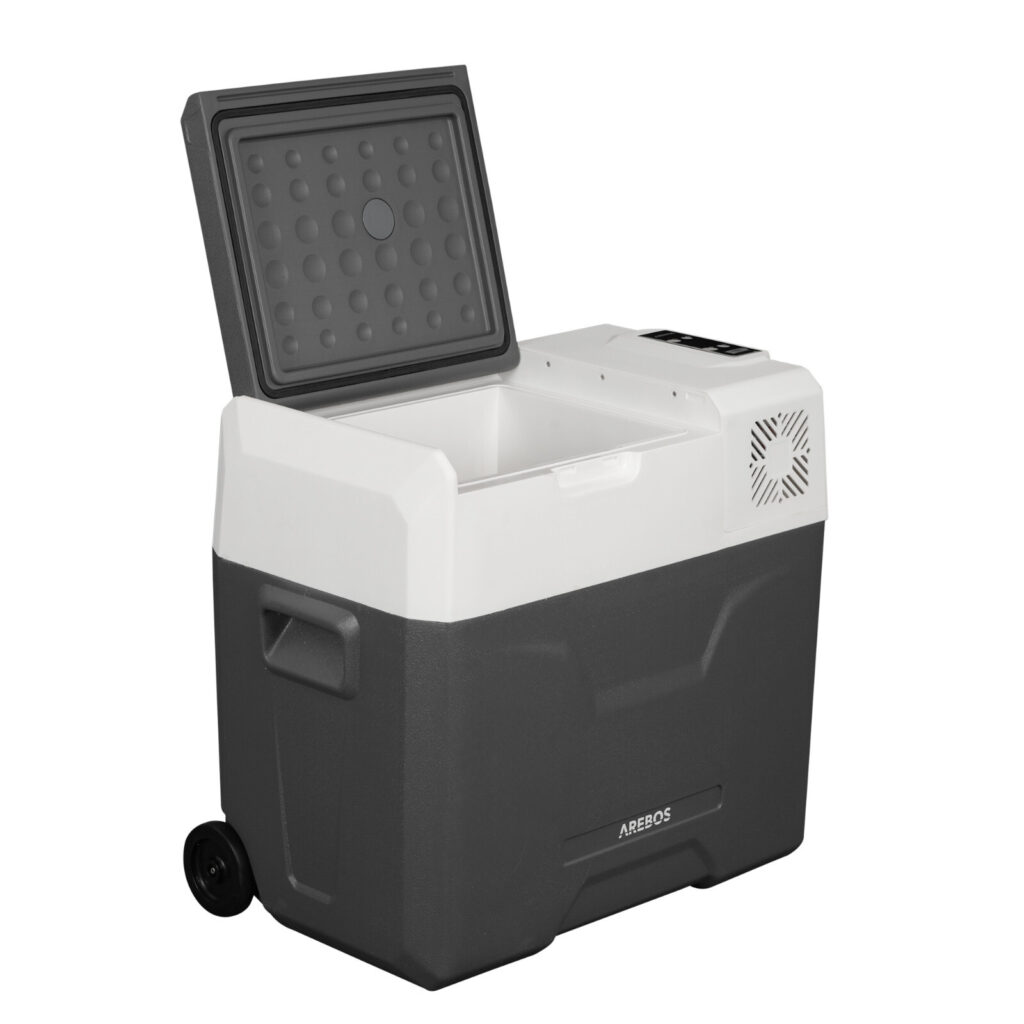
A big compressor cooler only earns its place if it genuinely makes camping easier. Otherwise, it is just one more heavy box taking up the trunk.
After about 2.5 years with the Arebos 47L compressor cooler, I think I know very clearly which side of that line it lands on for me. In the right setup, it has been genuinely useful. In the wrong one, I would not want it at all.
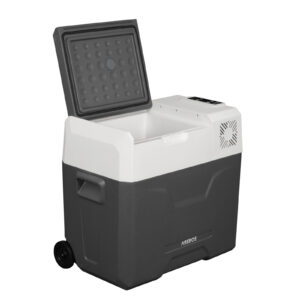
I use it around five times each summer, mostly on longer family camping trips where I can park the car right next to the tent. That detail is the key to this whole review. This is not something I want to carry far, and it is not the kind of cooler I would choose for more mobile camping. But as a large, practical compressor cooler for staying put near the car, it has worked very well for me.
Most of the time, I use it for real food, not just a few drinks. On longer trips, it has been big enough for me to keep about a week of refrigerated food for my family of four. I have also used it on longer road trips mainly for cold drinks, but camping is the reason I bought it and still the reason it keeps coming with me.
So this is not a first-impression review or a weekend test. It is based on repeated use over several summers, enough to make the strengths and the annoyances very familiar.
Quick verdict
If I had to sum up my experience quickly, it would be this:
– The Arebos 47L has been a very good fit for family car camping
– Its biggest practical strength is capacity that actually changes how I pack for longer trips
– In my use, it has been good for about a week of refrigerated food for a family of four
– Cooling has been reliably solid in normal Swedish summer temperatures of around 20 to 25C
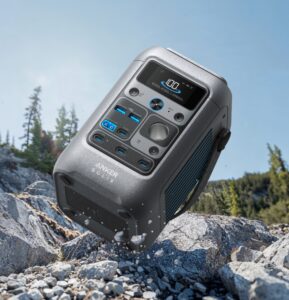
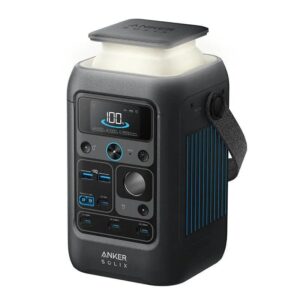
– I run it from the car’s 12V socket while driving and usually from a BLUETTI AC180 at camp
– In that setup, the power demand has felt manageable
– It is noticeably noisy, though still tolerable for me
– The main downside is simple: it is bulky, heavy when full, and takes up a lot of trunk space
– The wheels and pull-up handle help, but I still do not want to carry it far
– After about 2.5 years, mine has been reliable with no problems
If you want something that works more like a portable campsite fridge and you usually camp close to the car, I think it makes a lot of sense. If you want something lighter, smaller, or easier to move around, I would look elsewhere.
Why I bought it and how I use it
I bought this cooler because I wanted a proper compressor model with enough room to make longer family camping trips easier.
A small cooler can work for a short outing, but once you want to stay away for several days and bring proper food, size starts to matter a lot. That is where this one has made sense for me. The marketed 47-liter size is large enough that it changes how I plan. Instead of treating refrigeration as something that only helps for a day or two, I can plan around having cold storage for a much longer stretch.
My usual setup looks like this:
– I pack it at home with camping food
– I run it from the car’s 12V socket while driving
– At the campsite, I usually power it from my BLUETTI AC180
– I use it as my main cold storage for the whole trip
That is why I keep coming back to the same description: I use it more like a portable campsite fridge than a casual cooler.
And that is also the best way to judge whether it suits you. If you do base-camp style camping, stay in one place for several days, and want proper refrigerated food at camp, this kind of cooler makes sense. If you move often, lift gear in and out all day, or camp where the car cannot stay close, the size starts to work against it.
Who I think this cooler is for
After 2.5 years, I think this cooler has a pretty clear lane.
I think it makes sense for people who:
– do car-based camping
– stay in one place for several days
– want to bring real food, not just snacks and drinks
– have a practical way to keep a compressor cooler powered
– care more about capacity than portability
That is exactly my use case. On longer family trips, being able to bring proper refrigerated food makes camp life easier and cuts down on constant shopping.
I think it makes much less sense for people who:
– move camp often
– cannot park close to where they sleep
– mainly want cold drinks for a day or two
– have shops close by anyway
– want something easy to carry by hand
That last point matters more than it might sound. If I know I will be moving around a lot, or I am camping somewhere with stores nearby, this cooler usually feels too big for the job. But when the trip is longer and the car stays close, it feels exactly right.
Size and portability: the main tradeoff
The biggest downside is also the most obvious one: it is big.
In real use, that means two things. First, it takes up a serious amount of trunk space. Second, once it is full of food and drinks, it is not something I want to carry far.
Empty, it is manageable enough. Loaded, it becomes heavy enough that portability is clearly not one of its strengths.
The good news is that Arebos at least made it easier to handle in the ways that matter most for this kind of product. It has wheels and a pull-up handle, and those help a lot once it is on the ground. In my use, the worst part is usually lifting it in and out of the trunk. After that, rolling it into place is much more reasonable.
That is an important distinction.
My honest summary on portability is this:
– lifting it is the annoying part
– rolling it is fine
– carrying it far is not what it is made for
As long as I can park close to the tent, I am happy with it. If I had to drag it across a campsite or down a long path every time, I would not feel nearly as positive.
Cooling performance in real summer camping use
This is the part that has kept me happy with it.
In my normal use, in typical Swedish summer temperatures around 20 to 25C, it gets cold quickly enough to be useful without much waiting around. I have not done timed testing, so I am not going to pretend I can give exact pull-down numbers. I can only say that in practical use, it has never felt slow or frustrating.
More importantly, once it is running, it has kept food reliably cold in my experience. That is the part I care about most. On multi-day family trips, I want to feel comfortable storing meat, dairy, and other refrigerated food, and over repeated trips that has been my experience with this cooler.
That matters more to me than whatever a spec sheet promises. I am not reviewing it as lab equipment. I am reviewing it as something I depend on at camp, and in that role it has felt dependable.
I also want to keep the framing careful. I have mostly used it as a cooler, not as a dedicated freezer, so I do not think my review is the right place to make strong freezer claims for this exact variant. If freezer performance is your main priority, I would not rely on my experience alone for that.
As a cooler, though, it has been very solid for me.
Capacity: the reason I keep bringing it
The main reason I still like this cooler is that the size is not just impressive on paper. It is useful in a way that changes the trip.
For my family of four, I can keep about a week of refrigerated food in it for a camping trip. That does not mean everything magically fits without thought. Like any cooler, it still helps to pack sensibly. But it has enough room that I do not constantly feel like I am playing Tetris with milk, breakfast food, meat, drinks, and everything else.
That is what separates it from the smaller options I looked at.
A cooler this size changes the rhythm of the trip. I can shop before leaving, set up camp, and feel like the food situation is properly covered for several days. That removes a lot of friction from family camping. If I had to buy food every day or two, or cut back sharply on what we bring because the cooler was too small, the whole point would be weaker.
For me, that is why the bulk is worth accepting on the right kind of trip. The capacity is not just a bonus. It is the main reason I bring it at all.
How I power it in the car and at camp
In the car, I run it from the 12V socket, and that has been simple and reliable for me.
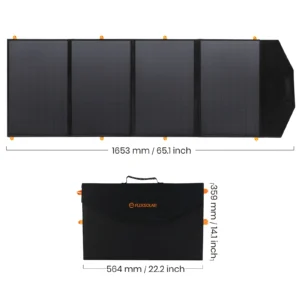
At camp, I usually power it from my BLUETTI AC180. I want to keep this part grounded in real use rather than make it sound more scientific than it is. In my setup, the cooler and a Starlink Mini run overnight from the AC180, and by morning the power station often drops to around 40 to 50% before recovering during the day with solar. That tells you something about the setup as a whole, but it is not a cooler-only power measurement.
What I can say is that in my own setup, the cooler’s power demand has felt manageable. I expected a large compressor cooler to feel more demanding than it actually has.
Sometimes I do not even take it out at camp. I just leave it running in the trunk of the car. That works especially well for me because I have a Tesla, so in my case there is plenty of power available for that kind of use. I would not generalize that to every vehicle setup, but for me it has been convenient.
So while I do not want to make hard claims about efficiency, I can say that from a day-to-day ownership perspective, it has been easy enough for me to live with from a power standpoint.
Noise at camp: noticeable, but tolerable for me
This cooler does make noise, and I do not think that should be glossed over.
If no rain is expected, I often leave it outside the tent, and in that setup I can definitely hear it cycling. Personally, I have been fine with that. It has never bothered me enough to make me change how I use it.
That said, not everyone in my family feels the same way. My wife has been more bothered by the noise than I have, while my kids have not cared at all.
That more or less sums it up. The noise is real, but people will react to it differently. If you are very sensitive to humming or compressor cycling at night, placement matters. If you are relaxed about background equipment noise, you may find it perfectly acceptable.
For me, it lands in the category of noticeable but manageable. I would not call it quiet, but I also would not call it a serious problem in my own use.
Controls, app, and everyday usability
In day-to-day use, I think this cooler is straightforward.
The controls work well, and I have had no trouble with the basics. That matters more to me than a long list of features. I mainly want to set the temperature, check that everything is working, and move on with the trip.
There is also a Bluetooth app, which I see as a useful extra rather than a major selling point. I like having it, and it is convenient to check settings without walking over to the cooler every time, but it is not the reason I bought it.
One small detail I appreciate a lot is the drain plug in the bottom. That sounds minor until you have cleaned a cooler without one. Being able to drain it properly makes cleanup much easier, especially after a longer trip when there are always small spills, condensation, or general food mess to deal with.
So while this does not feel like a premium product, it does get several everyday details right.
Build quality and reliability after 2.5 years
My overall impression of the build is that it is decent and functional, not luxurious.
To me, it feels like a budget-oriented product rather than a premium expedition-style one. I do not mean that as a criticism so much as a realistic description. It does not feel overbuilt or especially refined. The materials and finish feel more practical than fancy.
What matters much more to me is whether it actually keeps doing its job.
On that front, I really cannot complain. In 2.5 years of ownership, with regular summer use, I have had no problems at all. No breakdowns, no strange cooling behavior, no control issues that mattered, and no app problem serious enough to remember. It has simply worked.
That is a big part of why I still rate it highly for my own use. With gear from more budget-oriented brands, I care much less about image than about whether it keeps showing up and doing what I need it to do. So far, this one has.
My bottom line after 2.5 years
After 2.5 years, I think the Arebos 47L compressor cooler is a very good fit for a specific kind of camping.
For me, that means longer car-based trips, the car parked close to the tent, enough power to run a compressor cooler comfortably, and a family setup where food storage matters enough to justify the space it takes up.
In that role, it has worked extremely well for me. It cools quickly enough for normal summer use, keeps food reliably cold on my trips, holds enough food to support around a week of camping for my family of four, and has fit into my power setup without becoming a constant concern. The wheels, handle, drain plug, and straightforward controls all help too.
But I would not recommend it universally.
It is big, bulky, and takes up a lot of trunk space. When it is full, it is also heavy enough that I do not want to carry it far. If you move around a lot, camp where the car cannot stay close, or usually take shorter trips with easy access to shops, I think this cooler starts to make much less sense.
So my conclusion is simple: for my kind of camping, it has been the right tool. Not because it is elegant or especially portable, but because it meaningfully reduces the food hassle on longer trips. If that is what you need, I think it is easy to like. If you need something more flexible, lighter, or less intrusive in the car, I would look at smaller options instead.