Screenshot
The Anker SOLIX C300 DC has become one of those rare bits of gear that makes more sense the more I use it.
At this point I have had it for about 1 year and used it for more than 30 actual days, across roughly 15-20 different trips. It has become my main Starlink Mini power source for short off-grid use. Most of that real-world use has been with either a 120W FlexSolar panel or a smaller 40W panel, plus the usual mix of iPhones, iPads, a MacBook Air M3, and the built-in light on top.
So this is not a spec-sheet rewrite or a lab test. It is simply my experience using the C300 DC in the kind of setup I actually care about. And for that setup, it has been a very good fit.
What kind of power station this is
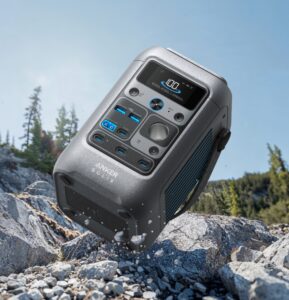
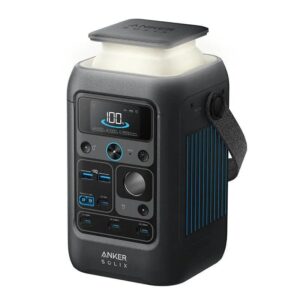
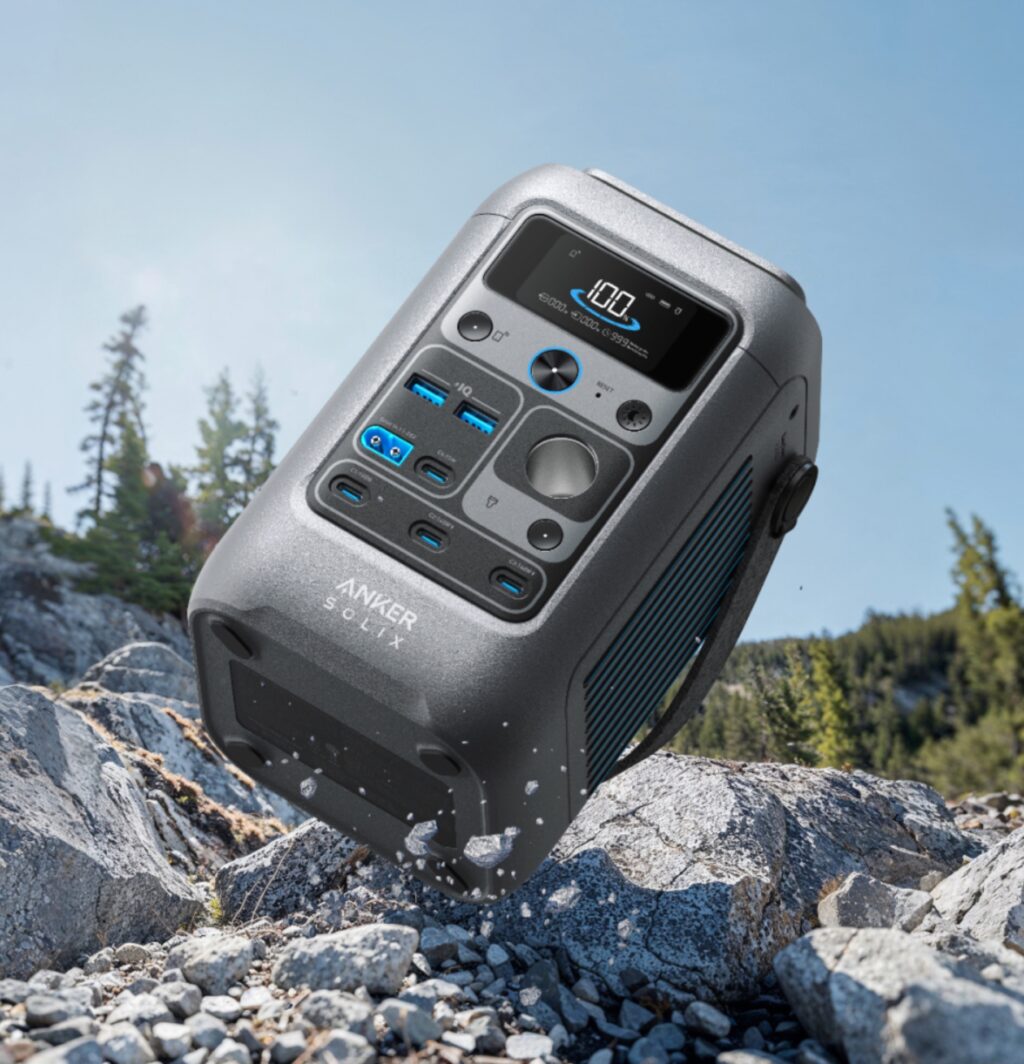
The Anker SOLIX C300 DC is a 288Wh LiFePO4 power station with 300W total output. What makes it different from a lot of small power stations is that it is clearly built around USB and 12V use, not AC.
That is the whole point of it.
On the hardware side, it gives me:
– 4 USB-C ports
– 2 USB-A ports
– 1 12V car socket
– No standard AC outlets
For some people, that last point will end the conversation immediately. If you need AC, this is not the right product.
For me, though, that design is a big part of the appeal. I do not really want a tiny box that tries to do everything badly. What I want is something compact that can run Starlink Mini, charge my Apple devices properly, work well with a solar panel, and stay simple. The C300 DC fits that idea very well.
Why it fits my use case so well
The main reason I like the C300 DC is that it feels built for the gear I actually bring.
My setup is not centered around kettles, heaters, or random AC appliances. It is mostly:
– Starlink Mini
– phones
– tablets
– a MacBook Air
– lights
– small USB gear
That is exactly the sort of load this power station handles well.
I think that is also the best way to understand the C300 DC. It is not trying to be a universal little backup box for every possible device. It is much better than that, but also narrower than that. If your kit is mostly USB-powered gear and 12V devices, it makes immediate sense. If your thinking starts with AC sockets, it probably does not.
In fact, one of the few things I would change is not really about this model itself. I just wish there were larger DC-only power stations like this, because for my own use I like this approach a lot more than the usual small AC-focused units.
My solar charging test with a 120W FlexSolar panel
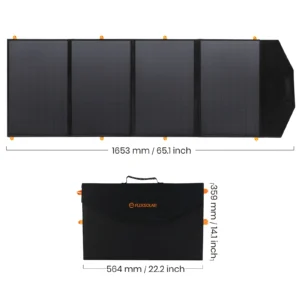
One of the most useful tests I did with the C300 DC was with my 120W FlexSolar panel.
When I hooked it up, the power station was at roughly 50%. I pointed the panel in the general direction of the sun, but I was not trying to dial it in perfectly. Even in the early morning, I saw around 91W coming in.
What really stood out to me was what happened next: the C300 DC went from roughly 50% to 100% in about 1.5 hours, and it did that while also powering my Starlink Mini at the same time.
That matters more to me than ideal-condition marketing numbers. I was not obsessing over panel angle, and it still performed well enough that I came away thinking this is a very practical solar pairing for real use.
Of course, that was with my panel and my setup, not a promise that every panel combination will behave exactly the same way. But for me, that one session told me a lot:
– the C300 DC works well with a decent portable panel
– it can keep up with real-world low-power loads while charging
– it does not need perfect conditions to feel useful
That last point is important, because it is what moves a product from “interesting on paper” to something I actually want to bring.
The smaller 40W panel has also been more useful than I expected. In decent sun I usually see around 30-35W from it, and that is enough to keep the C300 DC at 100% while also running the Starlink Mini. It is obviously not the same kind of charging setup as the 120W panel, but it makes the smaller panel much more practical than I would have guessed from the wattage alone.
Why I keep reaching for it with Starlink Mini
The biggest reason I keep using the C300 DC is simple: it is a very good match for Starlink Mini.
In my use, the Starlink Mini draws roughly:
– 15-20W while idling
– 20-25W when I am watching YouTube, browsing the web, and doing normal online stuff
Once I saw those numbers in normal use, the C300 DC made even more sense to me. It is not oversized, but it also does not feel underpowered for this job. That is why I now think of it as my primary Starlink Mini battery.
This is also where the lack of AC stops looking like a compromise and starts looking like focus. For my setup, I do not need the unit to pretend it is for everything. I need it to handle a modern low-power internet setup efficiently and without fuss. That is exactly what it does.
Starting from 100%, I would say the C300 DC can run the Starlink Mini for at least 24 hours in my normal use. Part of the reason is that the Mini pulls more power when I am actually using it during the day, but at night it is mostly idling closer to 15W. In real use, that makes the battery stretch further than people might assume if they only think about daytime load.
Charging iPhones and iPads
For phones and tablets, the C300 DC has been very easy to live with.
I did not do formal timing tests with my iPhones and iPads, so I am not going to pretend I have exact charge-time numbers. What I can say is that it always seemed to max out the charging speed the devices would accept, which is exactly what I wanted from the high-power USB-C ports.
In actual use, charging those devices only caused a small battery drop on the power station when I was not also connected to solar. And if the solar panel was connected, the C300 DC would just sit at 100%.
That is one of the practical things I like most about it. I do not have to think too hard about topping up phones and tablets. I just plug them in and move on.
Charging my MacBook Air M3
My MacBook Air M3 has also been a very good match for this power station.
It charged at full speed in my use. I do not remember the exact wattage, and I have not done a formal 0% to 100% test from the laptop side, so I want to be clear about that.
Still, in real use I have never had any issue charging it from the C300 DC, and because the MacBook Air M3 is so efficient, the power station can stretch for several days for me when that laptop is part of the setup.
That will obviously depend on how heavily someone uses their laptop, but for my own use it has been a very natural pairing. Nothing about it feels strained or awkward.
What a mixed-use day actually looks like
If I have the Starlink Mini, phones, tablets, and the MacBook Air all using the C300 DC over the same day, I would expect it to make a real dent, but not drain it completely. A rough real-world example for me would be something like 100% down to 30-40% by the end of a day with everything hooked up.
The MacBook seems to be the device that makes the biggest dent. That is not a complaint. It just helps explain where the battery goes in a more mixed setup, because the C300 DC feels almost effortless with phones and tablets but starts to feel more like a proper power station once the laptop joins the load.
Portability and the smaller details I actually use
Another reason the C300 DC works for me is that it is small enough that I actually want to bring it.
At 2.8 kg / 6.17 lb, it is compact enough to feel easy for short trips. That matters more than people sometimes admit. A power station can have a good feature list and still get left behind if it is just annoying enough to carry. The C300 DC has stayed on the right side of that line for me.
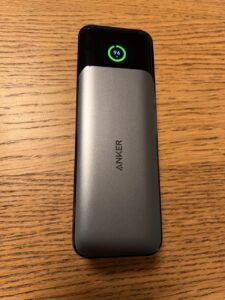
That portability is also what separates it from my bigger and smaller alternatives. Compared with the Bluetti AC180, the C300 DC is light enough that I actually want to carry it on shorter solo trips or keep it at the bottom of my backpack. Compared with the Anker 737, I reach for the C300 DC when I know I want to use Starlink Mini for longer than just a few hours.
There are also two smaller things I appreciate more than I expected.
The built-in light
I do use the built-in light on top from time to time, especially when I want a simple lantern-style light without setting up something else.
On family camping trips, I also sometimes use the C300 DC in the tent to charge all our phones and iPads. In that kind of setup, the lantern on top makes it even more useful because it turns the power station into a charging hub and a light source at the same time.
App control
I also find the app control genuinely useful, especially for the lantern. It is not the main reason I bought the unit, but it is one of those quality-of-life features that I appreciate more once I start using the power station regularly.
Main strengths
After using it repeatedly, these are the strengths that stand out most clearly to me.
1. It makes a lot of sense for USB-C and 12V gear
This is the biggest one. If your setup is mostly modern USB gear plus something like a Starlink Mini, the C300 DC feels very well judged.
2. The solar pairing feels genuinely practical
Seeing around 91W from the 120W FlexSolar panel in early morning conditions, and then watching the power station go from about 50% to 100% in roughly 1.5 hours while also running Starlink Mini, gave me a lot of confidence in it.
3. The USB-C ports are actually useful
This matters more than it sounds. My phones, iPads, and MacBook Air all feel like a natural fit with this unit rather than an afterthought.
4. It is compact enough to be easy to bring
At 2.8 kg / 6.17 lb, it is portable in a way that suits short trips well.
5. It works extremely well as a Starlink Mini power source
This has become the clearest real-world win for me. If I think about what this power station has done best in my own use, this is probably the first thing I would mention.
Main limitations
This is a slightly unusual section, because for my own use I have not really run into a major weakness. After more than 30 days of actual use, I still do not have a real product-level complaint. It still feels very high quality, and physically mine is basically like new apart from a few minimal scratches.
Still, there are a few honest caveats.
1. If you need AC, this is not for you
This is the obvious one. If your gear depends on AC outlets, skip this and buy something else.
2. It is best for a specific kind of user
I actually think this is one of the reasons it works so well, but it does mean the C300 DC is not trying to be for everyone. It is best when your kit is mostly USB-powered gear and 12V devices.
3. Its biggest frustration is really the category, not the product
My main frustration is that I wish there were more larger DC-only power stations like this. The C300 DC itself fits my use case very well. I just like this DC-first approach enough that I wish there were more ways to scale it up without moving into AC-heavy designs.
Likely camping and off-grid use cases
Based on how I actually use it, I think the C300 DC makes the most sense for:
– Starlink Mini users
– solo campers who want more Starlink Mini runtime than a power bank like the Anker 737 comfortably gives
– car campers
– short off-grid trips
– people with a USB-C-heavy gear setup
– people who already use, or want to use, a portable solar panel
– family campers who want a compact charging hub and light inside the tent
In my own setup, it works well as:
– my main Starlink Mini battery
– a charging hub for phones and tablets
– a power source for my MacBook Air M3
– a small lantern thanks to the built-in top light
Who should buy it
I think this is a very good buy if:
– your setup is mostly USB-C, USB-A, and 12V
– you want a compact power station for camping, road trips, and short off-grid use
– you use Starlink Mini
– you care more about DC and USB usefulness than having a pair of small AC outlets
– you want something that works well with a portable solar panel
Who should skip it
I think you should probably skip it if:
– you need AC outlets
– you want one power station to run all kinds of household-style devices
– your gear does not really benefit from the strong USB-C and 12V focus
– you want something aimed at heavier loads or a more all-purpose backup role
That is really the dividing line with this product. For me, the lack of AC is not a weakness at all. For someone else, it could be the dealbreaker.
Final verdict
For my own use, the Anker SOLIX C300 DC has been a really good fit.
At this point, I would absolutely buy it again. In fact, I plan to buy another one as a spare in case this one ever breaks or gets discontinued. Along with the FlexSolar 120W panel and the Starlink Mini, it has become one of my favorite pieces of gear.
It has handled my Starlink Mini well, worked nicely with my 120W FlexSolar panel, charged my iPhones and iPads properly, and had no problem with my MacBook Air M3. On top of that, I actually use the built-in light and appreciate being able to control it from the app.
The moment that really sold me was seeing it go from roughly 50% to 100% in about 1.5 hours from the FlexSolar panel while it was also powering Starlink Mini, and doing that without me being especially careful about panel positioning. That made it feel less like a clever little gadget and more like a genuinely useful part of a real off-grid setup.
So my conclusion is pretty simple.
If your setup looks like mine and you want a compact, DC-first power station for Starlink Mini, Apple devices, camping, and short off-grid trips, I think the Anker SOLIX C300 DC is excellent.
If you need AC power, then this is the wrong product. But if you mostly want efficient power for modern low-power gear, I think Anker got the balance here very right.