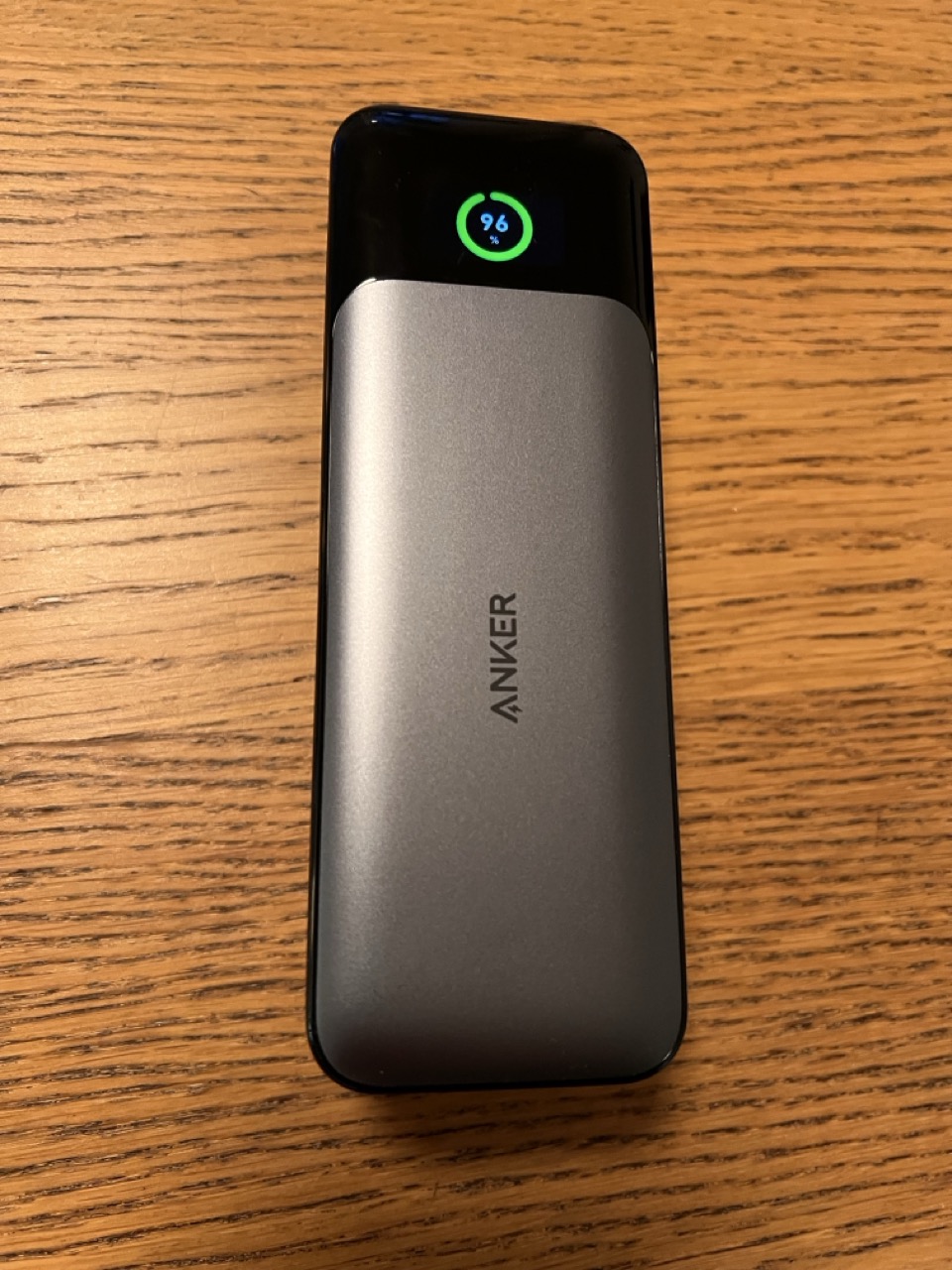
Some gear sounds useful when you buy it. Some gear turns into the thing you keep grabbing without thinking. The Anker 737 Power Bank (PowerCore 24K) has been that second kind for me.
I have owned it for about 2.5 years, and from spring to autumn I have used it regularly, roughly 5 to 10 times a month, mostly for family camping, solo hikes, and general portable power when I want something smaller than a real power station. More recently, I have also used it with my Starlink Mini for short sessions outdoors.
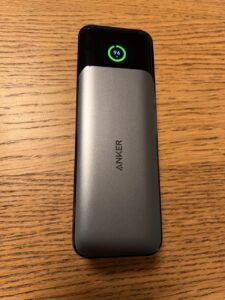
On paper, it is a 24,000mAh / 86.4Wh power bank with up to 140W USB-C input/output, plus 2 USB-C ports and 1 USB-A port. In actual use, what matters more is that it has found a very practical middle ground. It is much more capable than a basic phone power bank, but still small enough that I actually want to bring it.
That is the main reason I still like it after all this time.
Why I bought it, and why I still use it
When I bought the Anker 737, I wanted four things: good power output, fast charging, solid build quality, and a size that still felt realistic to carry.
I did not want a tiny battery that only made sense for emergency phone top-ups. I also did not want to jump straight to bringing a larger power station every time I left home. A lot of the time, I just want something that gives me real flexibility without becoming its own packing decision.
That is where this battery has worked out so well for me.
It feels like a serious piece of gear, but not an overbuilt one. It charges quickly, it has enough output to be useful beyond phone charging, and it stays portable enough that I do not talk myself out of bringing it. After 2.5 years, that still feels like its biggest strength.
The short version
If I had to sum it up simply, this is how I see it:
– I have had it for about 2.5 years
– I use it 5 to 10 times a month in season
– For my iPhone 13 Pro Max, I think the most honest real-world answer is about 2 full charges
– In my Starlink Mini setup, I usually get about 2 to 4 hours of runtime
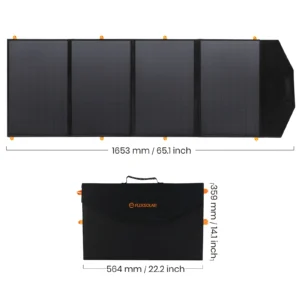
– I especially like pairing it with the FlexSolar 40W foldable panel
– It feels well built, dependable, and easy to carry for what it offers
– Its main limitation is obvious: sometimes I wish it had more capacity
That last point really is the tradeoff. The Anker 737 is useful because it stays portable. If it had a lot more capacity, it would probably stop being the kind of battery I casually throw into my gear.
Camping use: reliable phone power matters more than big claims
The most common job this battery does for me is also the least dramatic. I use it a lot on family camping trips to keep my iPhone 13 Pro Max going.
That matters more to me than a lot of flashy use cases. On a camping trip, my phone is my camera, map, weather check, message device, and general backup for all the little things that come up. I do not want to be hovering over the battery percentage all day.
In my real use, I think the safest and most useful way to put it is this: I get about 2 full charges out of it.
Could the number be a little higher under the right conditions? Maybe. I think 2 to 3 charges could be possible depending on starting percentage, charging losses, and how strict you want to be about what counts as a full charge. But I have not tested that in a controlled way, and I would rather give the number I actually trust than the most flattering estimate.
For me, “about two full charges” is the honest answer. And in practice, that has been enough to make it very dependable on trips.
Where it gets more interesting: hikes and overnight use
As useful as it is for camping, I think the Anker 737 makes even more sense on solo hikes and overnight trips.
That is where the balance really clicks. I want enough battery that I am not down to rationing every watt, but I also do not want to carry a larger system unless I know I truly need it. The 737 gives me room to charge my phone, keep some reserve, and bring a bit more flexibility into the trip.
This is also where it pairs well with my FlexSolar 40W foldable panel. That combination has been one of the most practical parts of owning the 737. It is not a huge off-grid setup, and it does not pretend to be. It is just light enough and capable enough to make sense for the kind of use I actually do.
That matters a lot to me. I do not need every piece of gear to be a full system. Sometimes I just need it to do one level of job really well.
Starlink Mini use: useful, but within limits
I want to be careful with this part, because it would be easy to overstate what this battery can do.
I have owned the Anker 737 for about 2.5 years, but my Starlink Mini use is from a shorter, more recent period within that ownership. I also have not tested the 737 with high-draw devices, so I am not trying to turn this into a broad claim about demanding gear in general.
What I can say is that, in my setup, the Anker 737 has been genuinely useful for short Starlink Mini sessions.
I have typically seen my Starlink Mini sit somewhere around 15 to 25W in my use. That is not a universal measurement, just a rough real-world range I have observed myself. Based on that setup, I usually get about 2 to 4 hours of Starlink Mini runtime from the Anker 737.
Again, I would treat that as a practical estimate from my own use, not a benchmark. Conditions vary, usage varies, and I am not trying to present my result as technical proof of what everyone should expect.
Still, that 2 to 4 hour range is enough to matter. It is often the difference between bringing the Starlink Mini or leaving it at home. If I want a short connectivity window on a hike or overnight stop, the 737 makes that feel realistic without forcing me up to my larger Anker C300 DC.
That is really the story here. The 737 is not my answer for maximum runtime. It is my answer when I want enough runtime to be useful in a package I still want to carry.
Solar pairing: especially good with the FlexSolar 40W
One reason this power bank has stayed useful is that I do not just use it as a standalone battery. I use it as part of a small solar-friendly setup.
Outdoors, I recharge the Anker 737 only from solar. At home, I just charge it from whatever USB-C charger is nearby. That flexibility is part of why it has been easy to live with over time.
For hiking and smaller outdoor use, the panel that matters most here is the FlexSolar 40W foldable panel. For me, that has been a very good match with the 737.
In good sun, I have had stretches where I could keep the Anker 737 at 100% while also running the Starlink Mini. I am not presenting that as something you should expect in every condition. It is simply something I have seen in favorable real-world conditions when the panel was getting the kind of sunlight you hope for.
I have also noticed a pattern when solar is connected and I am charging my phone at the same time: in my use, it seems like the phone benefits first, while the Anker 737 percentage often stays roughly flat. Then once the phone is done, the battery percentage is more likely to start climbing again. I am not offering that as a technical explanation of how the power management works. It is just what I have observed in repeated use.
That kind of observation is important to me because it is how gear actually gets judged in the field. Not by ideal numbers, but by whether the setup behaves in a way that makes sense and earns trust.
For bigger camp setups, I naturally start thinking more about something like the FlexSolar 120W foldable panel or my Anker C300 DC instead. I am not claiming direct comparison testing there. I just think those make more sense when the goal shifts from lightweight flexibility to a larger solar or battery setup.
Portability, weight, and the capacity tradeoff
The Anker 737 is not featherweight. When I pick it up, it feels substantial.
But I do not mean that as criticism. To me, it feels dense and capable rather than annoyingly heavy. I notice the weight, but I do not resent it. That is an important difference.
This is probably the part of the review that best explains why I still use it so much. It gives me enough power to feel genuinely useful, but it has not crossed over into the category where I start thinking, “Do I really want to carry this?”
That said, the tradeoff is real. Sometimes I do wish it had more capacity.
There are definitely moments when extra runtime would be nice, especially once things like the Starlink Mini enter the picture. But I think it is important to be honest about what that would likely mean. More capacity would almost certainly mean a larger, heavier battery, and that would chip away at the very thing that makes the 737 so practical.
So yes, I sometimes want more from it. But I also think the current size is a big part of why I keep bringing it in the first place.
Long-term reliability and build quality
After 2.5 years, this is one of the easiest sections to write.
The build quality has been excellent in my experience. It feels robust, compact, and properly made. It does not give me the sense of being a product built to impress for a week and then fade into the background for the wrong reasons. It feels like gear meant to be used.
More importantly, it has been very reliable for me. I have not had any issues that made me question it. No failures, no strange charging behavior, no ongoing quirks that turned into a trust problem. It has just done its job.
I also have not had much trouble with heat in my use. I mention that because outdoor gear tends to show weaknesses fairly quickly if it has them. With the 737, my experience has been pretty uneventful in the best way. It has felt stable and predictable.
That kind of consistency matters more to me than headline specs. When I pack for a trip, I want gear that already feels proven.
What I think it is good for, and what I do not
I think the Anker 737 makes a lot of sense for people who want a premium, high-output power bank that is still portable enough to come along regularly.
Based on my own use, I think it especially suits:
– camping, where dependable phone charging matters more than chasing idealized numbers
– solo hikes and overnight trips, where size and flexibility both matter
– short Starlink Mini sessions, where you want useful runtime without bringing a larger power station
– anyone who wants something more capable than a basic power bank, but not a full jump to a bigger battery system
At the same time, I want to keep the limits clear.
I have not tested it with high-draw devices, so I am not going to make sweeping claims about laptops under heavy load or other demanding use cases. And I would not frame it as a replacement for a larger power station if you know you want more reserve, more solar headroom, or longer Starlink use.
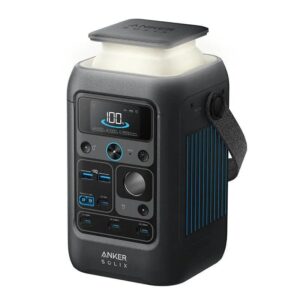
That is where something like my Anker C300 DC starts to make more sense.
My bottom line after 2.5 years
After about 2.5 years of ownership, the Anker 737 has earned a very simple compliment from me: I still reach for it all the time.
It has been one of the most useful portable batteries I own because it gets the balance right. It offers strong output, fast charging, very good build quality, and reliable everyday use, but it stays small enough that I actually bring it on camping trips, hikes, and overnights.
For my use, the practical numbers are the ones that matter most: about 2 full iPhone 13 Pro Max charges, about 2 to 4 hours of Starlink Mini runtime in my setup, and a particularly useful pairing with the FlexSolar 40W foldable panel. Those are the things that have made it feel like real gear rather than just a good spec sheet.
Its limitation is also easy to understand. Sometimes I want more capacity. But I do not think that undercuts the product. If anything, it defines it. The Anker 737 works because it gives me a meaningful amount of power without turning into something bigger and less convenient.
That is why I still keep packing it.