This product was purchased with my own money. The manufacturer had no influence over this review.
- Introduction
- Quick Verdict
- Design and Build
- Setup and Deployment
- Power and Efficiency
- Performance in the Wild
- Portability in Action
- Pricing and Value
- Additional Features
- Pros and Cons
- Best for / Not for
- Conclusion
Introduction
The Bluetti MP200 is a portable 200W solar panel designed to keep your power stations charged when you’re off-grid or facing a home power outage. It’s a foldable four-panel array that lets you tap into the sun’s energy wherever you go . I primarily used the MP200 while car camping (paired with a Bluetti AC180 power station) and as an emergency power source at home. In both scenarios, it proved to be a reliable way to harvest solar power for charging my devices and battery packs. This review will cover the MP200’s design, performance, and value to help you decide if it’s the right solar panel for your needs.
Quick Verdict
The Bluetti MP200 is a robust and efficient 200W solar panel that delivers on its promises. It combines premium build quality with high solar conversion efficiency, making it a strong performer for off-grid power. In real-world use it can output around 170–175W under ideal conditions, which is impressive for a panel of this class. It’s extremely easy to set up and use, and its durable IP67-rated design gives confidence for outdoor use in various weather. The downside is its hefty weight (about 8.7 kg), which limits true portability – it’s best suited for car camping, RVing, or stationary backup rather than backpacking. Pricing was initially high, but recent price drops have made the MP200 a good value for a high-quality 200W solar panel. Overall, if you need a dependable solar charger for a power station and don’t mind the weight, the MP200 is an excellent choice.
Pros: High 24% efficiency cells ; Rugged waterproof build (IP67) ; Easy fold-out deployment; Strong output (~170W in sun) ; Wide device compatibility; Improved pricing/value.
Cons: Heavy (~19 lbs) and bulky to carry long distances; Not ideal for backpacking; Initially expensive (though now cheaper); Portable design not meant for permanent mounting.
Design and Build
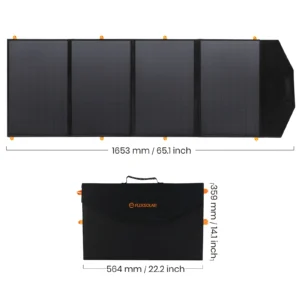
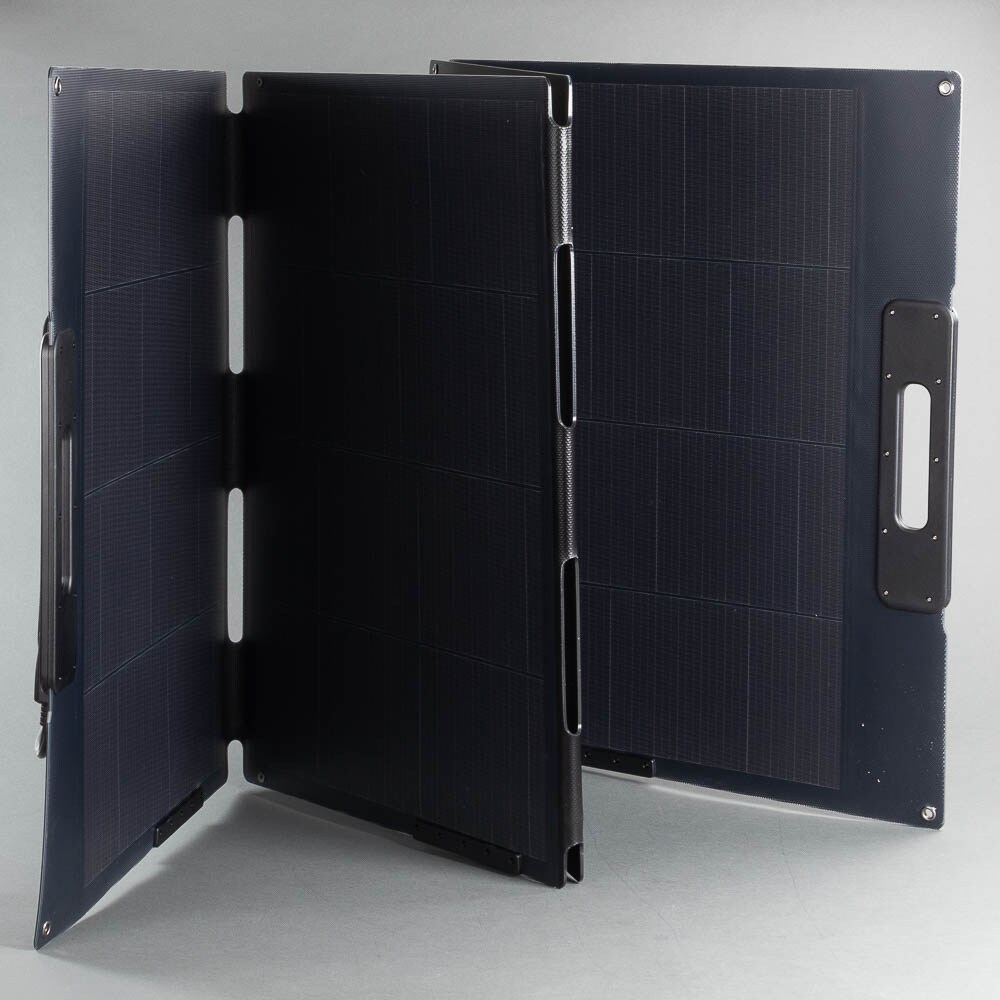
Bluetti clearly put a lot of thought into the design and build of the MP200. This is a foldable solar panel comprised of four monocrystalline silicon panels with ETFE lamination for protection . When folded, it forms a compact package about 27×22 inches in size and 2.5 in thick, with a built-in carrying handle for transport . The panel is covered in a durable, easy-to-clean surface (PET/ETFE coating) that not only protects the solar cells but also gives the MP200 an IP67 water resistance rating . In other words, it’s dust-tight and can withstand water splashes or even brief submersion – a big plus if you’re camping in unpredictable weather. (Bluetti does caution not to leave it in heavy rain for too long despite the waterproofing .)
The build quality feels excellent. The panels are mounted in a rugged fabric and frame, with sturdy hinges connecting them. Everything about it feels premium and solid, albeit at the cost of some extra weight. At about 8.7 kg (19.1 lbs) , the MP200 is heavier and slightly larger than Bluetti’s older PV200 panel. This extra bulk comes from the enhanced materials (the lamination and additional waterproofing layers) and a lower-voltage cell configuration, which together contribute to its “more premium feel” according to users . In the hand, it’s definitely on the heavier side for a “portable” panel, but in return you get a panel that feels durable enough for the outdoors. I also noticed thoughtful details like an integrated pouch on the back to store the attached MC4 connector cable when not in use (a common feature on Bluetti panels that keeps things tidy). Overall, the MP200’s design balances portability with toughness, making it well-suited for rugged outdoor use.
Setup and Deployment
One of the MP200’s strongest points is how easy it is to set up and deploy. The process is essentially foolproof: you unfold the four-panel array, prop up the panels using the integrated kickstands, and plug the MC4 connector into your power station’s solar input. It takes only a minute or two from packed to collecting sunlight. In fact, one owner notes it “takes about a minute or so to set up” and that the folding panels are strongly constructed and sit flat at the proper angle to the sun . I found the same — the three adjustable kickstands on the back let you angle the panels optimally, and they held the panel steady even in a light breeze. Bluetti even marks one of the stand positions for ~45 degrees, helping you get that ideal tilt angle for maximum exposure to the sun (especially useful in mornings or late afternoons).
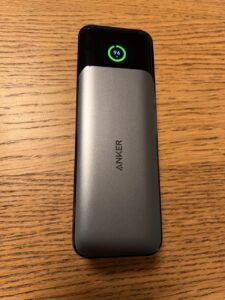
No additional hardware or controllers are needed to start charging, since the MP200 outputs through a standard MC4 cable that can feed into any MPPT solar input. This makes it truly plug-and-play. I used it primarily with the Bluetti AC180 power station, which has a built-in MPPT controller – the panel connected directly via the included MC4 cable and immediately began charging the AC180 once in sunlight. I also tested it with an Anker SOLIX C300 DC (a 288 Wh portable power bank) and, with the appropriate adapter, the MP200 worked flawlessly to charge that unit as well. The universal compatibility of the MP200 is a big plus: as long as your power station or solar generator supports MC4 inputs and is within the voltage/current range (MP200’s ~23 V open-circuit, 11 A short-circuit), it will work . This means it’s not limited to Bluetti brand devices – you can use it with Jackery, EcoFlow, Anker, or other systems, provided their input specs match (most ~200W panels share similar output ranges).
Another aspect of deployment is positioning the panel. Thanks to the adjustable kickstands, I could easily tweak the MP200’s angle throughout the day to track the sun. The panel’s dark surface warms up under sunlight, but its laminated coating is designed to handle high temperatures without efficiency loss . In practice I didn’t notice any significant drop-off as the panel heated up; it consistently delivered strong output when well-angled (more on performance next). The ease of folding it back up is also worth noting – the panels latch together securely with buckles, forming a suitcase-like bundle with the handle on top. Overall, the setup is extremely quick and user-friendly, making it a hassle-free experience to add solar charging to your campsite or home backup setup.
Power and Efficiency
The core purpose of a solar panel is to produce power, and the Bluetti MP200 does this very well. It’s rated for 200 W maximum output under standard test conditions, which is on par with other portable panels in its class. What sets the MP200 apart is the high conversion efficiency of its cells – up to 24% efficient, according to Bluetti . In theory, higher efficiency means the panel can convert more of the sunlight into usable electricity, which can help in conditions like indirect sun or cloudy weather. In real-world use, I was able to see this efficiency in action. On a perfect clear day around midday, the MP200 consistently produced around 170–175 W of power into the AC180, which is very close to its 200 W rating. This is in line with other reviewers’ findings – for instance, a test of Bluetti’s similar 200W panel (PV200) showed it averaging about 160–165 W and peaking over 170 W under ideal alignment . Getting the full 200 W is rare without absolutely ideal conditions, but ~170+ W is an impressive real output for a portable panel, and I was quite satisfied with that performance.
Even in less-than-ideal conditions, the MP200 delivers solid power. On partly cloudy days, the output naturally fluctuates, but I still saw it generate tens to over 100 watts whenever the sun poked through. Thanks to the panel’s efficiency and size, it can harvest a decent amount of energy in marginal conditions – “even on cloudy days, it still delivers decent performance,” as one report noted . The panel’s lower voltage design (it has an open-circuit voltage around 22.9 V, versus ~26 V on the older PV200) doesn’t negatively impact single-panel output, but it does mean the MP200’s voltage stays in a safe range for most solar generators. An advantage of the lower voltage is if you want to chain multiple MP200 panels in series for faster charging, you can connect more of them before hitting a given power station’s input limit . For example, some larger Bluetti stations allow up to ~145 V input – you could string together five or six MP200s in series safely (whereas higher-voltage panels like PV200 might allow one fewer in series). In my use, I only had one MP200, but it’s good to know the system is scalable if I added another panel later to cut charging time.
To put its charging ability in perspective: The Bluetti AC180 (which has a ~1152 Wh battery) can be recharged from 0 to full in roughly one sunny day using a single MP200 panel. I typically got the AC180 from about 20% up to 100% over the course of a summer day (several hours of strong sun) with the MP200. Smaller power stations like the Anker C300 (288 Wh) can be topped up in just a couple of hours of good sunlight. Of course, actual charging times will depend on sun intensity, angle, and how consistently you can keep the panel aimed at the sun. But overall, the MP200 provides plenty of power for camp electronics, small appliances, and battery charging when you manage to give it good sun exposure. It essentially turns a solar generator like the AC180 into a self-sufficient system – as long as the sun shines, you have a renewable power source feeding it.
Performance in the Wild
Using the MP200 out in the field has been a very positive experience. I primarily use it for car camping trips, where it sits out in the open collecting rays while I enjoy the outdoors. In these real-world environments, the panel’s rugged build really shines. The laminated panels feel like they can handle the occasional bump or splash without issue. I’ve accidentally dropped the folded panel a short distance and it showed no signs of damage. The IP67 rating also gives peace of mind – morning dew, or a surprise drizzle, won’t ruin the panel (I did wipe it dry after light rain just to be safe, but there were no ill effects). The sturdy kickstands and the panel’s weight actually help in windy conditions; the MP200 stays put better than some lighter panels I’ve used, which tend to flap or tip over in gusts. Once angled towards the sun, the panel remained steady and continued pumping power to my AC180 throughout the day.
In terms of reliability, aside from one hiccup with my first unit (more on that in a moment), the MP200 has performed flawlessly. It consistently provides the expected power under varying conditions. I’ve used it in summer heat and cool autumn weather; temperature can affect solar efficiency, but the panel’s performance remained stable. The high-quality cells and the ETFE coating seem to handle heat well without significant drop-off. On one camping trip, even as afternoon temps rose above 30 °C, I was still seeing over 150 W output in late-day sun, which is quite good.
I also employ the MP200 as an emergency power source at home. During a recent brief neighborhood outage, I set the panel up in my backyard to recharge the Bluetti AC180, which in turn ran my essential devices. This scenario underscored how easy it is to deploy – even in a pinch, I had the panel out and charging in minutes – and it reinforced the value of the MP200’s reliable power output. When the grid is down, every watt counts, and the MP200 was delivering as much as the waning afternoon sun could offer. This use case highlights the panel’s role not just in leisure activities like camping, but also in home preparedness.
It’s worth mentioning the customer support and quality assurance aspect here. The very first MP200 unit I received had an issue: it produced no power out of the box due to a suspected internal wiring fault. This was obviously a letdown initially, but Bluetti’s customer support was excellent – they quickly shipped me a brand-new replacement unit before I even sent back the defective one. The new panel worked perfectly and has continued to do so ever since. While it was unfortunate to encounter a defect, the quick turnaround and no-hassle replacement left a good impression. It suggests that Bluetti stands behind their warranty (1-year on panels) and is responsive if problems arise. Since then, the replacement MP200 has seen many hours of outdoor use with zero problems, which gives me confidence that my bad unit was an isolated case. In day-to-day use, the MP200 feels like a trustworthy, heavy-duty piece of gear – exactly what you want when relying on the sun for power.
Portability in Action
The Bluetti MP200 is marketed as a portable solar panel, and in the context of vehicle-based adventures or short walks from the car, it absolutely is. When folded up, it resembles a slim briefcase with a comfortable handle on top, making it easy to lift and carry short distances. I often slide it into the back of my car or trunk – it fits neatly and doesn’t flop around due to its sturdy construction. One user even noted it “fits nicely in the back of the motorhome” alongside their other gear . The panel’s foldable design means it can be stored in tight spaces when not in use, and the integrated cable pouch keeps the cables from tangling with other equipment. For car camping and RV use, this panel’s form factor works very well; you can stash it behind a seat or against a wall when driving, then pop it out at the campsite.
However, portability is a relative term. At ~19 pounds, the MP200 is not something you’d want to haul on a long hiking trip or carry by hand for long. It’s definitely more “luggable” than truly lightweight. On one camping outing, I had to carry it about 200 meters from the parking spot to a clearing – by the end of that, I was feeling the weight. If you plan to move frequently on foot, a smaller or lighter panel (or multiple smaller panels) might be better. Bluetti’s own PV200 panel, for example, weighs a couple kilograms less, albeit with a slightly higher voltage and price. But that said, the MP200’s weight is a trade-off for its robust build and 200W capacity. Many ultralight panels top out at 100W or so; here you’re getting a lot more output per deployment. For my use (which is mostly camping near the car), the weight hasn’t been an issue at all – I’d rather have the extra power output and toughness. I just carry it from the car to the campsite and let it do its job.
Another aspect of portability in action is how quick it is to pack up when you’re on the move. In this regard, the MP200 scores well. When leaving a site, I can fold the panel up in under a minute, latch it closed, and I’m ready to go. There are no separate pieces to worry about (like extra stands or loose cables) – everything either folds or tucks into the unit itself. This makes it convenient for situations where you might need to reposition the panel throughout the day or if you suddenly need to pack up (e.g., sudden rainstorm or moving to a new spot).
In summary, the MP200 is portable enough for the uses it’s intended for: outdoor enthusiasts traveling by vehicle, and homeowners who want a panel they can deploy on demand. It’s not the most portable in terms of weight, so if you need to carry a panel in a backpack for miles, this isn’t the one. But for the majority of off-grid applications where you have a car, camper, or even just a backyard, the MP200’s portability is perfectly adequate and its folding design is very space-efficient.
Pricing and Value
When it comes to pricing, the Bluetti MP200 started off on the higher end of the scale but has since become quite reasonable for what it offers. Initially, this panel was quite expensive – early adopters (myself included) paid a premium for the robust design and Bluetti branding. At one point, the MP200’s price was roughly half the cost of Bluetti’s own PV200 panel for the same 200W output , which made it a compelling deal if you knew about it. (Bluetti seems to source the PV200 and MP200 from different suppliers, which may explain the price discrepancy .) In practical terms, the MP200 used to retail for around the mid-$400s or higher in the US, but nowadays it’s often listed about $399 (and Bluetti frequently runs sales) . I’ve also seen bundle deals – for example, buying two MP200 panels together – that bring the per-panel cost down further.
Considering the build quality and performance you get, I’d say the MP200 now offers good value. It’s not the cheapest 200W panel on the market; you can find no-name or generic 200W folding panels for less money, but those often come with compromises (lower actual output, less durable construction, no waterproofing, or a lack of warranty/support). With Bluetti, you’re paying for a reliable product and a company that has an established support network. My experience with the warranty replacement reinforces that value – if something goes wrong, you have a real company to contact and a resolution on the table. Additionally, the MP200’s feature set (IP67 rating, 24% efficiency, etc.) is typically found on higher-end panels. Some competitor panels with similar specs (by Jackery, Goal Zero, etc.) are usually in the same ballpark or higher in price.
Another point in MP200’s favor is that its price has dropped significantly since its introduction, as the technology matures and Bluetti scales up production. This means if you were put off by the cost a year ago, it’s worth looking again. The value also scales if you plan to use it heavily – for someone relying on solar daily for off-grid living or long trips, the MP200 will pay for itself in utility. On the flip side, if you only occasionally need solar or are on a tight budget, there are smaller panels (100W or 120W range) that cost less and might suffice for light use. But for a serious user who wants a durable 200W panel, the MP200’s current pricing strikes a sweet spot between cost and quality. Overall, I feel it’s money well spent for the peace of mind and performance it provides.
Additional Features
Being a solar panel, the MP200 is a fairly straightforward device, but there are a few additional aspects worth noting beyond the basics:
- Weatherproof and Durable: The IP67 water resistance and the robust ETFE lamination aren’t just numbers – they translate to real-world durability. Many portable panels are only water-resistant at the junction box (if at all), whereas the MP200’s entire panel surface is protected . This means you can be less paranoid about the occasional splash or dust, and cleaning the panel is as easy as wiping it with a damp cloth. The panel also operates in a wide temperature range (-10 °C to 65 °C), so it can handle summer heat and winter cold without issue .
- Adjustable Kickstands: We touched on this earlier, but it’s worth emphasizing. The built-in kickstands on the back have adjustable straps so you can change the tilt angle. Bluetti even labels one setting for ~45° which is a great all-purpose angle. These kickstands mean you don’t need to prop the panel against a rock or improvise a stand – it’s self-supporting and lets you maximize solar intake by proper angling. It’s a small feature that can significantly boost your daily watt-hour collection if you adjust a couple times a day.
- No Built-in Controller: The MP200 is a pure panel – it does not include an integrated charge controller or USB ports. Some folding panels in the ~100W range include USB outputs to directly charge phones, etc., but Bluetti assumes you’ll be hooking this to a power station or an external solar charge controller. In my opinion, this is a good thing: it keeps the panel simple and maximizes compatibility. One buyer even noted it’s good that it “comes without a controller, leaving you free to get a quality one” as needed . Essentially, Bluetti didn’t impose any specific electronics on the panel, so you have full flexibility to use your own setup (and one less thing that could potentially fail on the panel itself).
- Chainability: If you need more than 200W, you can use multiple MP200 panels together. They can be chained in series or parallel (depending on your power station’s requirements). Just remember to use identical panels for chaining – Bluetti advises against mixing different panel models in one array , as mismatched voltage/current can reduce efficiency. With identical MP200s, though, you can expand your solar input easily. For example, two MP200 panels would give you up to 400W (under perfect conditions) and still maintain the same robustness and ease of use.
- Warranty and Support: The panel comes with a 12-month warranty , and based on both my experience and community feedback, Bluetti is responsive to support claims. Knowing that you have support for at least the first year (and likely beyond, as Bluetti often helps loyal customers) is an additional peace of mind feature, if you will. Solar panels generally have long lifespans, and while 12 months is a shorter warranty than the 25-year warranties of residential panels, for a portable panel it’s fairly standard. The support experience I had suggests that Bluetti stands behind the product within that period.
In terms of bells and whistles, that’s about it – the MP200 focuses on doing one job well: providing portable solar power. It doesn’t have fancy add-ons like lights or app connectivity (which aren’t expected for a panel anyway). The beauty is in its simplicity and reliability. As long as you have sun, the MP200 will quietly do its work and charge up whatever is connected.
Pros and Cons
Pros:
- High Efficiency & Output: Uses monocrystalline cells with up to 24% efficiency, delivering strong wattage (I consistently got ~170W in peak sun) . This means more power harvested even under less-than-perfect conditions.
- Excellent Build Quality: Sturdy folding design with ETFE/PET lamination and IP67 waterproofing . Feels rugged and durable for outdoor use; can handle rain, dust, and rough handling.
- Easy Setup: Practically plug-and-play – unfold, tilt, and connect. Integrated kickstands make alignment simple, and it packs up in minutes . Great for both beginners and experienced users.
- Wide Compatibility: Standard MC4 output works with most solar generators and power stations (Bluetti, Jackery, EcoFlow, Anker, etc.). No proprietary connectors or controllers to worry about .
- Good Customer Support: Bluetti provides a 1-year warranty and was quick to replace the one defective unit I encountered, indicating strong support and post-purchase service.
- Improved Value: Price has come down significantly since launch, making it competitively priced for a 200W panel of this quality. Often available around $399 or on sale, which is a solid deal given the features .
Cons:
- Heavy & Bulky: Weighs ~19 lbs (8.7 kg) . While foldable, it’s not lightweight – carrying it long distances is tiring, so it’s not ideal for backpacking or where you need ultra-portability.
- Still Pricey vs. Generic Panels: Although the value is good for the quality, it’s more expensive than off-brand 200W panels. Budget-conscious users who don’t need the extra durability might find cheaper alternatives (albeit with lower performance/support).
- Not for Permanent Install: This is a portable panel, not meant for permanent rooftop mounting (no frame for that). If you need a set-and-forget solar panel at home, a rigid panel might be more appropriate.
- Initial QC Variance: My first unit had an internal wiring issue (no output), which shows quality control isn’t infallible. It was promptly replaced under warranty, but it’s a con that a defect slipped through at all. Fortunately, such cases seem rare based on other reviews.
- Size When Deployed: When fully unfolded, it’s about 2.07 m x 0.68 m (81.6″ x 26.8″) in area . Make sure you have enough space to lay it out toward the sun. In tight campsites or small balconies, a panel this size might be challenging to position.
Best for / Not for
Best For: The Bluetti MP200 is an excellent choice for car campers, van/RV travelers, overlanders, and off-grid cabin users who need a reliable source of solar power. If you’re frequently outdoors with a power station (like the AC180 or similar) and you want to recharge it daily, the MP200 will serve you well. It’s also great for home emergency backup, as it can recharge a mid-size power station in a day of sun – perfect for keeping essential devices running during outages. The panel’s rugged design makes it suited for harsh environments (desert camping, dusty festivals, humid climates) where lesser panels might fail. It’s basically made for anyone who needs high-quality, plug-and-play solar charging with a vehicle or basecamp to transport it.
Not For: The MP200 is not ideal for backpacking, hiking, or any situation where you have to carry your gear over long distances by foot. Its weight and bulk will be a hindrance in those scenarios – smaller folding panels or flexible mats would be more appropriate. It’s also not for those who only need a very occasional or small amount of solar power (in that case, a compact 100W panel might be more convenient and cost-effective). Additionally, if you’re looking to build a permanent solar install on a rooftop or van roof, the MP200 isn’t the right type of panel (you’d want fixed panels and mounting hardware, since the MP200 is designed to be portable and cannot be permanently mounted). Lastly, if budget is your absolute primary concern and you don’t need the MP200’s durability or efficiency, you might opt for a cheaper generic panel – but you’d be sacrificing the support and some performance. In short, avoid the MP200 if portability means “lightweight in a backpack” to you, or if you need a panel for a fixed installation.
Conclusion
In conclusion, the Bluetti MP200 200W solar panel proves to be a reliable and high-performing solar solution for off-grid power. After using it across various scenarios – from sunny campsite afternoons to emergency home power outages – I’m impressed with how well it delivers. The MP200’s combination of rugged build, easy usability, and strong power output make it stand out among portable panels. It essentially turns a portable power station into a self-sustaining generator, as long as you have sunlight. Bluetti’s attention to quality (save for the one hiccup I encountered) and customer support further add to the confidence in this product.
While it’s not the lightest panel around, and it requires a bit of an upfront investment, the MP200 offers peace of mind that it will perform when you need it most, whether you’re deep in the woods or dealing with a blackout at home. The recent price drops and sales have only made it more tempting, positioning it as a high-value option for serious users. If your use cases align with its strengths – car camping, RV living, backup power, or any off-grid adventures – the Bluetti MP200 is easy to recommend. It has proven to be a trustworthy companion that captures the sun’s energy day after day, and in my experience, it’s one of those pieces of gear that justifies its cost by making your off-grid life simpler and more powered. Overall, the Bluetti MP200 earns a strong recommendation for anyone in need of portable solar muscle with the durability to match.
Sources: The information and figures in this review were corroborated by Bluetti’s official specifications and user feedback. Key specs like the 24% efficiency and IP67 rating are from Bluetti’s product page , while real-world performance observations (e.g., ~170W output) are supported by independent tests . User experiences from the Bluetti community and reviews were also referenced to validate build quality, ease of use, and value . These sources, along with personal hands-on use, paint a comprehensive picture of the MP200’s capabilities and drawbacks.